
9 reflections on finishing a second book
Humanoid robots, Chinese philosophy and the end of reading.

Greetings from a relieved London, after last night’s edgy 🏴 🇳🇴 win. In other news, I finished up my second book this month. It’ll be out in January, so a few thoughts on that below, as well as a new FT books essay to share on China, along with the usual reading and other things.
Enjoy the weekend.
James

A dispiritingly occasional private mail for friends and family, with reading recs and other things that catch my eye. Feel free to unsubscribe below, if you’d rather not. If someone forwarded it to you, feel free to hit the big blue button.
Book ends
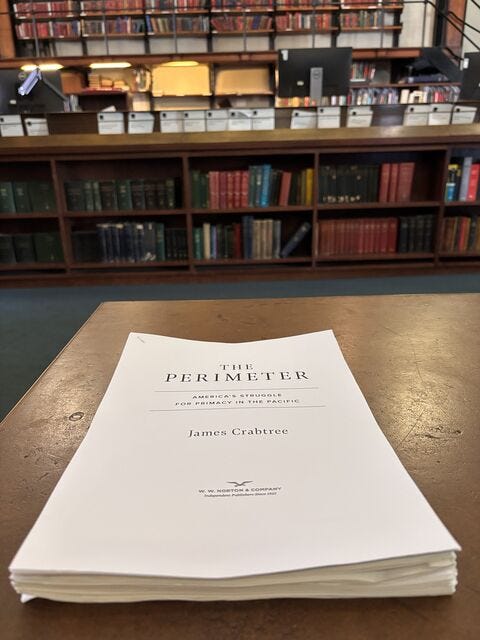
For more than a year I've been working on a second book. A week or I properly finished it. Writing is a strange business with many stages, so it’s often hard to know when you’re actually allowed to say the thing is done. A few thoughts:
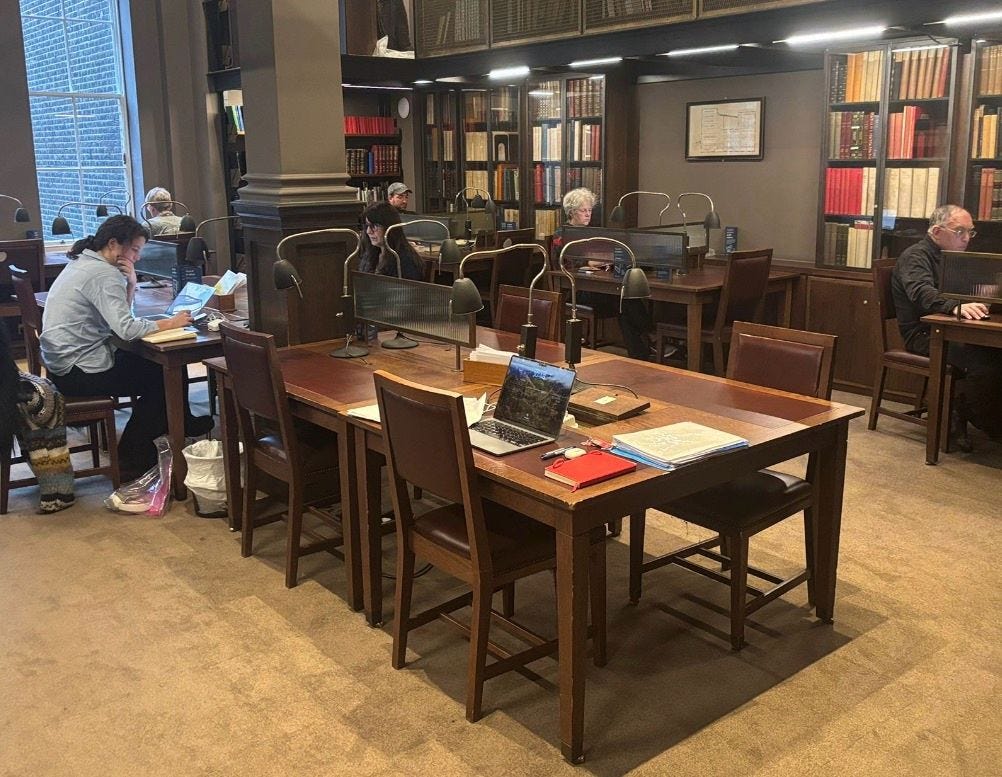
Finding a place to write. The most important thing. I mostly wrote my first book in a 24-hour Starbucks in Singapore. This time I was lucky enough to find the London Library, a wonderful institution on St James’ Square, founded by Thomas Carlyle in 1841. The desk I consider “mine” is below in the Stoppard Room, with the red notebook.
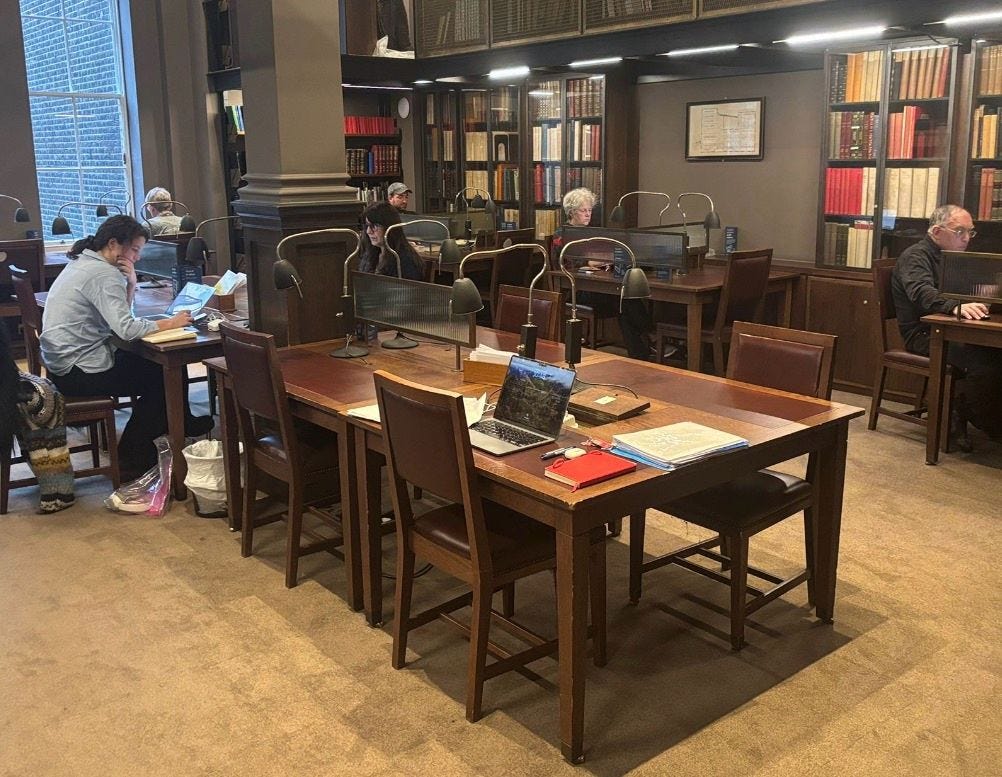
Writing needs quiet. The library was once written up in Tatler as surprising social and cultural hotspot: “Why The London Library, ‘a labyrinth of culture’, is also one of the capital’s most surprising social hotspots – just ask Tom Hanks and Helena Bonham Carter….”. There was something similar recently in The Times too. Mostly, I like it because it is quiet and it feels serious.
Starting is the hardest. You have a book proposal which turns out to be a poor guide to producing an actual book. Many original half-formed ideas turn out not to work at all. It feels like staring up towards the top of far-away mountain shrouded in cloud. Then you begin the trudge up.
Eventually, writing gets done. There is procrastination and delay, but in time chapters get sent back to publishers. Each is a small negotiation with yourself over whether it’s good enough, or wrapped up in hitting some arbitrary mid-way deadline. In time a flawed but full manuscript emerges, which feels like an achievement until you remember it’s really just the start of the next phase.
Editor’s comments come next. I was lucky to have an excellent editor in New York, but this is still where you find out how much of what you thought was clear actually isn’t. Many things get fixed in a stage called copy edits, which is your last chance to make big structural changes. It is also a strangely humbling experience, in which a stranger you never meet quietly fixes all your grammar mistakes.
Finally, proof edits. This landed for me a month or so ago. Here you get back something that is formatted like an actual book. You read the whole thing through, essentially for the last time. It is a nervy and solitary feeling, given you are reading your own words for pretty much the last time as a private document, before they become a more public, permanent thing.
The stages of ever-decreasing changes. As each step progresses, you are allowed fewer edits. Gradually the book goes from a thing that might be into a thing that is. By proofs, this means only the tiniest edits, on pain of death from a nervous publisher; fiddling with a sentence here, catching typos there, and regretting ideas you never chased down many months before.
All in all, this took more than a year a half. I got my book deal in spring 2024, and started writing seriously later that autumn. The final manuscript was done by January this year. Editing then takes another 6 months. To give a sense of the passing of time: towards the end I culled quite a lot of em dashes, out of fear they would raise suspicion of AI-powered writing, which wasn’t even really a thing when I first wrote the passages more than a year earlier.
In the end, editing is about acceptance. A book changes shape in your head as you write it, as well as on the page. The version you finish is never quite the one you set out to write. There are regrets for ideas you never followed up or characters you couldn’t include, as well as things you think work ok. And as you go through it you come to accept that it is what it is, and it isn’t going to get suddenly better, and that is ok too.
Each stage feels like an ending, until it turns out not to be. There’s no single moment of “finished”, just a series of steps where the thing gets slightly more finished than before. There’s a quiet satisfaction in that: not huge joy exactly, more like putting down something heavy you’d gotten used to carrying.
As you probably know by now, the book, The Perimeter, comes out in January 2026. More on that, inevitably, in due course.
3 things worth reading

Are Humanoid Robots Ready to Be Deployed? Excellent New Yorker essay by Stephen Witt on Neo, an oddly human android. You can see a video of him / it / they here at the WSJ.
The robot weighs just sixty-six pounds, and I was able to pick it up in a bridal carry. It communicates through a speaker in its chest, using several different voices; the default one is in a calm but authoritative masculine register, an A.I.-modulated mixture of several voice actors. Neo can talk, listen, and respond to commands. In its skull is a squarish motherboard, roughly the size of a slice of bread and studded with white capacitors that look like teeth. This is Neo’s brain. Using A.I., it tries to translate your words into physical actions. If you ask Neo to pick up a cup from a table, Neo will attempt to pick up the cup. If you ask Neo to put the milk in the refrigerator, Neo will attempt to put the milk in the refrigerator. But Neo doesn’t always succeed at these tasks, and no one really knows what it can or cannot do.
Who is China? Given my own FT piece on Chinese history this week, I enjoyed this essay from the always excellent Ian Johnson in Foreign Affairs, on the oddities and insecurities of Xi’s approach to history.
It remains unclear whether Xi’s version of China has any values beyond holding on to the territories of the old Qing empire and keeping the Chinese Communist Party in power, or whether the CCP’s project is capacious enough to accommodate the country’s historical hybridity…. Its national identity remains as troubled as it was when the first Chinese nation-state was founded. This presents the world with a worrying question: whether a country that is so uncomfortable in its own skin can be a pillar of stability as so many hope, or whether it is more likely to become a source of global instability, projecting its anxieties and neuroses onto the rest of the world. Beijing claims to aspire to the former, but its actions at home and, increasingly, abroad suggest it may be headed toward the latter.
The End of Reading Is Here by Rose Horowitch in the Atlantic. I’ve struggled to read as much as usual in the first half of this year. Seems I’m far from the only one, in this piece which at least seemed to be widely read this week.
The decline in reading cuts across age groups, gender, and education levels. Even the demographics that traditionally read the most—retirees, women, and college graduates—have seen a collapse. The books that people do read are simpler than they used to be…. Strangely, Americans are probably reading more words than ever before. What has changed is what they read, and how. People are bombarded with emails, text messages, X posts, Reddit threads, Instagram captions. This explosion of textual fragments has come at the expense of devoting sustained attention to longer written works that convey rich and complicated information. Maryanne Wolf, a cognitive neuroscientist at UCLA, argues that people are losing the ability to think deeply about writing. That doesn’t mean they are forgetting how to decode individual words. Rather, they are losing the higher-order abilities of comprehension and synthesis. America, in other words, isn’t illiterate. It’s postliterate.
Things that caught my eye
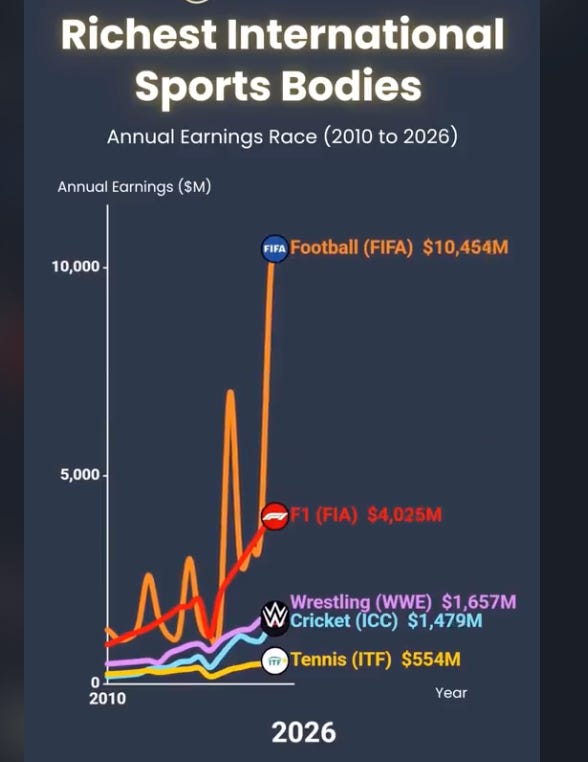
Why the world cup matters. Neat graphic showing just how important the world cup is to FIFA’s revenue compared to other sports.
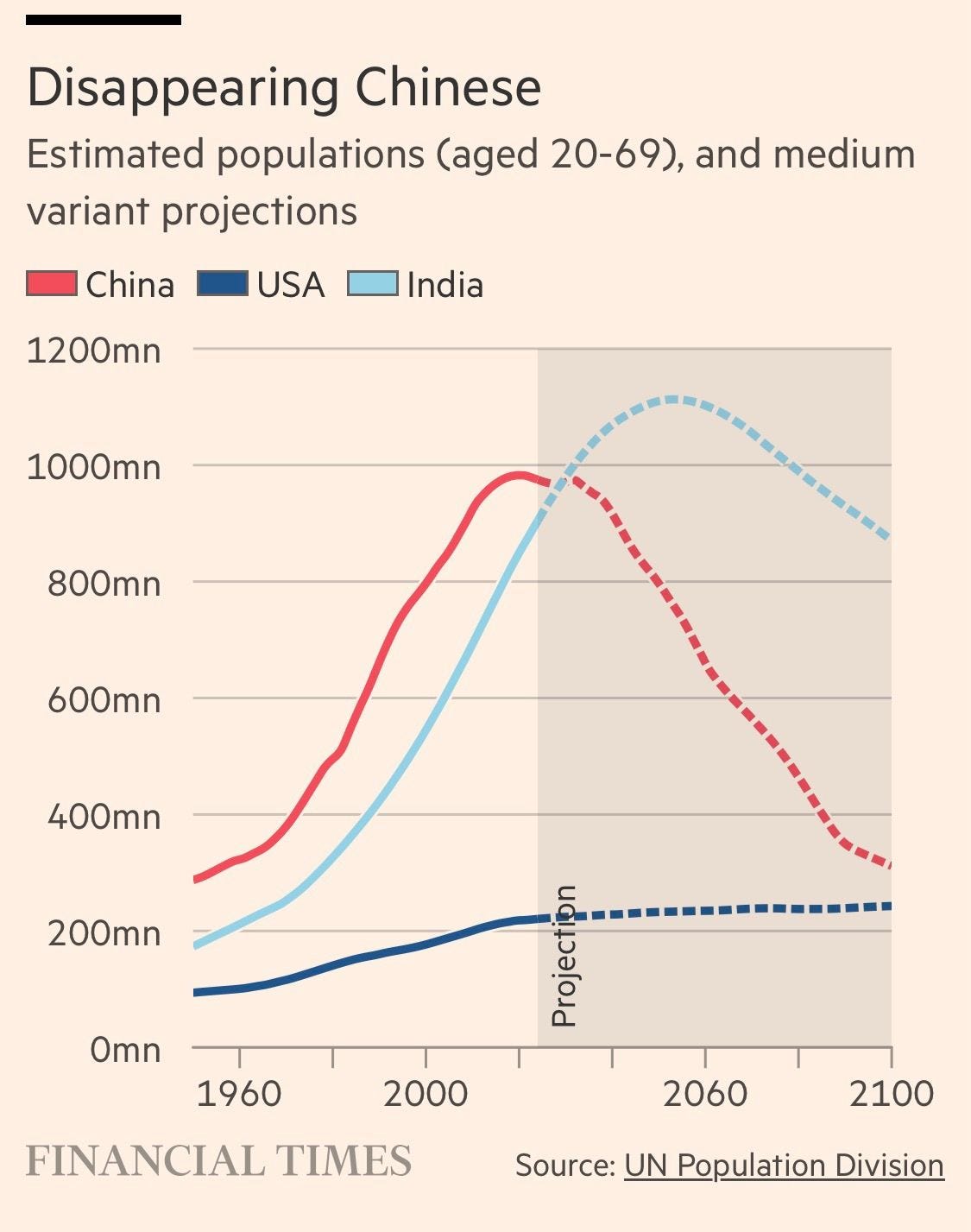
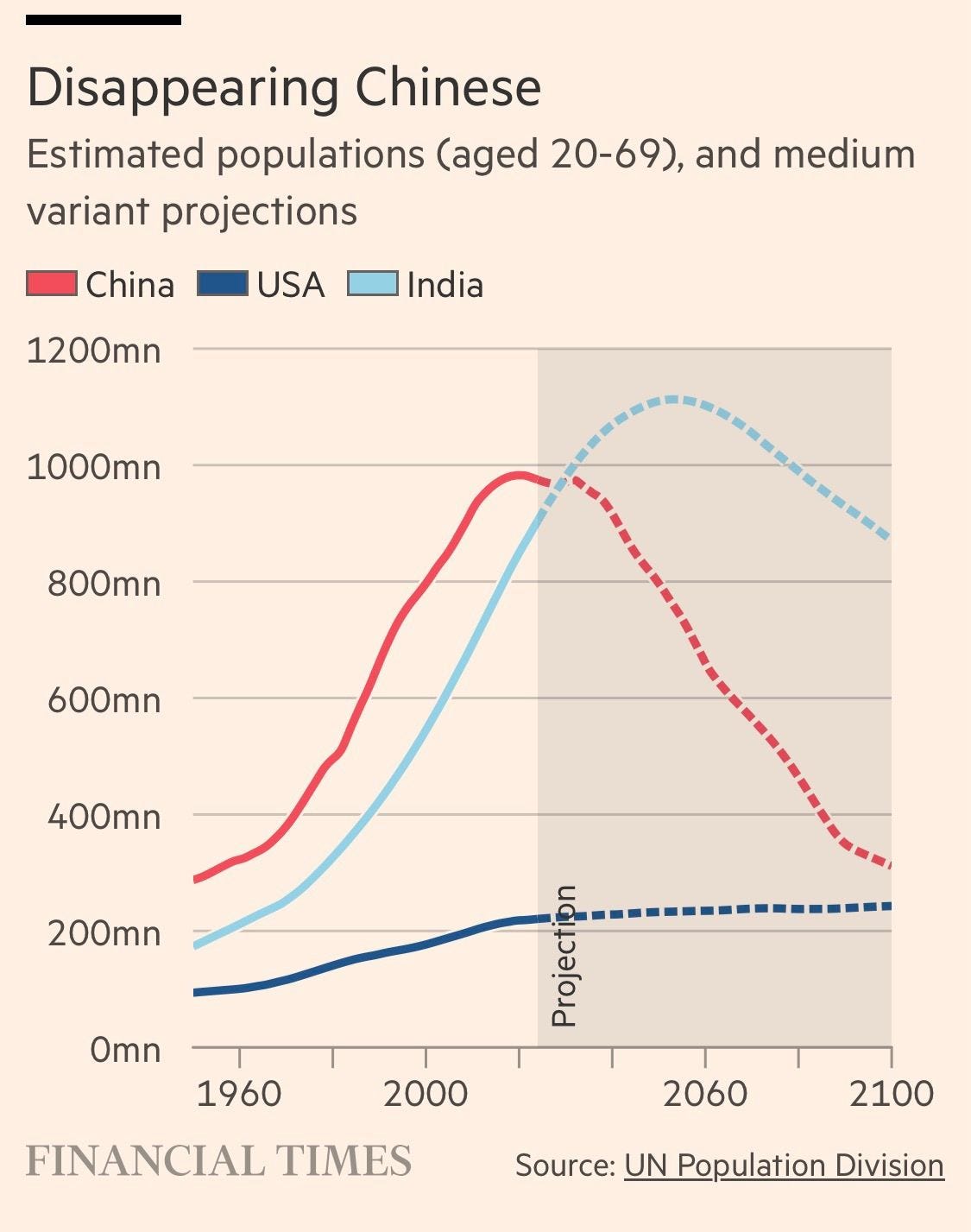
Peak China. By 2100, China will be the third most populous county, with Pakistan in second and Nigeria nearly as large. (H/T Toby Nangle in the FT).
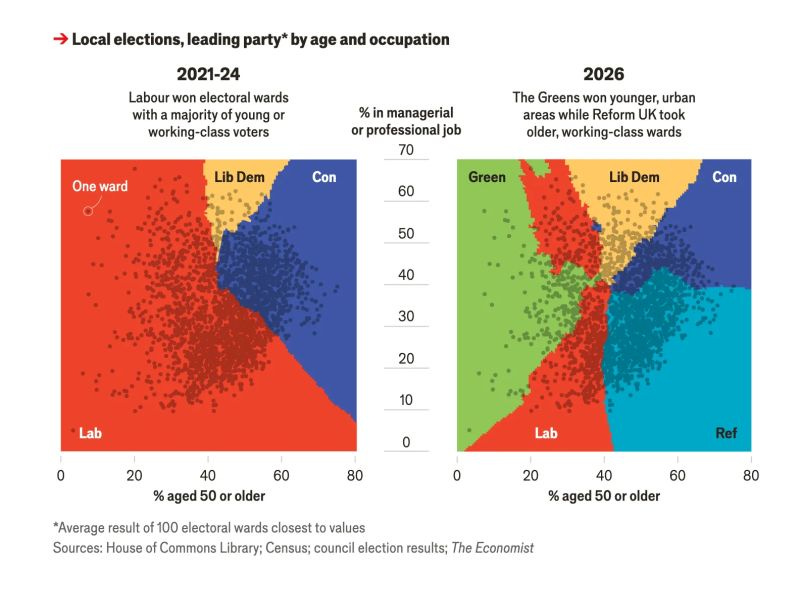
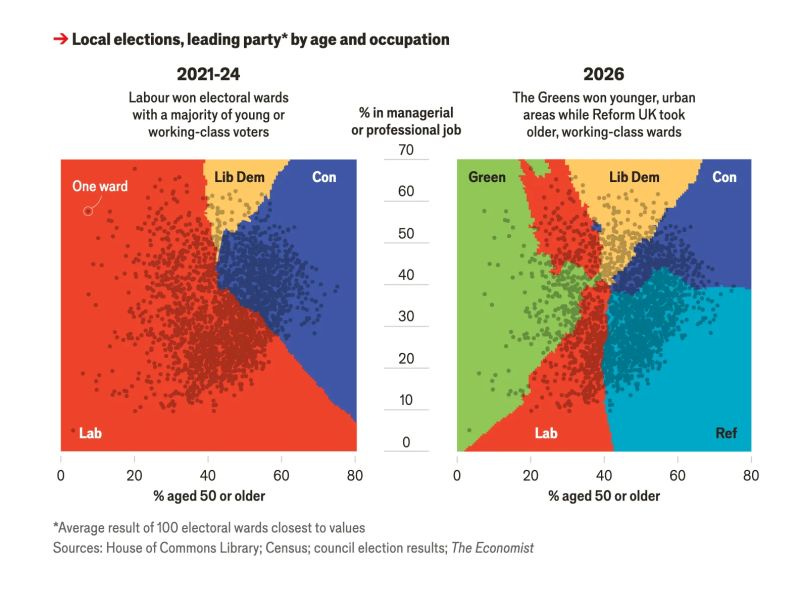
What fragmentation looks like. In the recent UK elections, older, working-class areas went Reform while the Greens won younger, urban areas. (From the Economist).
Short sentence. New York Times best sellers today have sentences that are about one-third shorter than they were a century ago. (From the Atlantic piece above)
Things I’ve been up
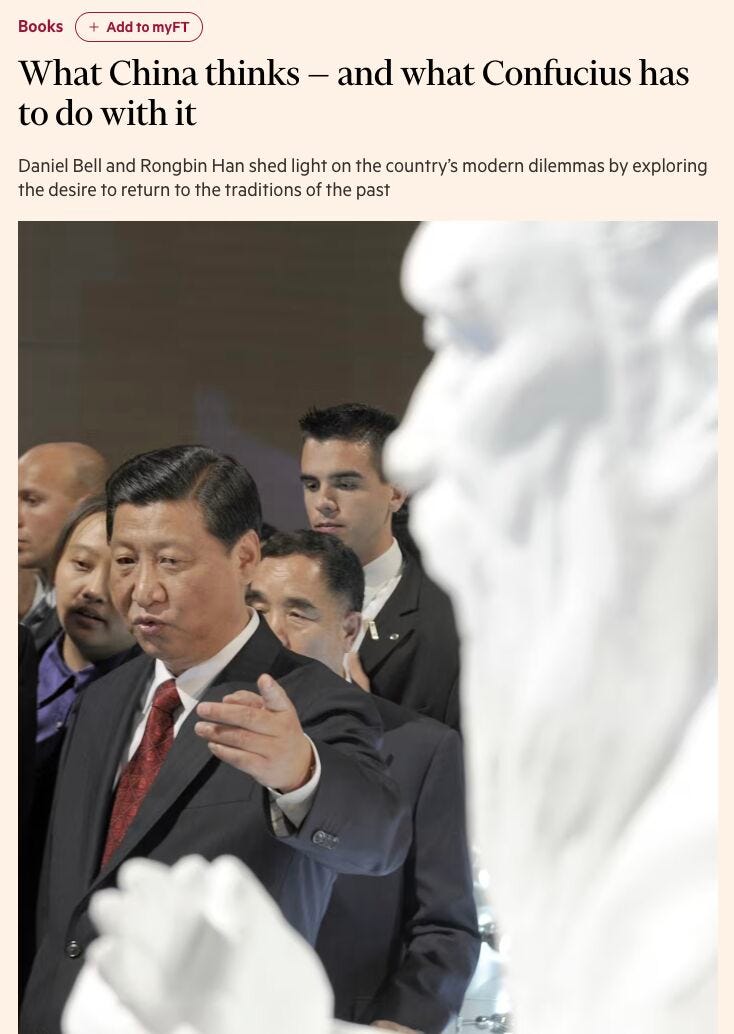
New FT book review. Having finished the book, a little more time to do other writing. In this new review in the FT, I looked at two books on a changing China. Most of it is about Daniel Bell’s new book, who I have written about before, looking at modern lessons from ancient Chinese philosophers. (PDF).
"For Xi, this reinvestigation of history has a clear practical purpose. As the Chinese Communist Party approaches its ninth decade in power and economic growth rates slow, its legitimacy no longer rests on prosperity alone. Instead, its leaders suddenly see the wisdom in promoting more venerable themes, from respect for hierarchy to the importance of stable governance. More broadly, this revival of ancient notions seeks to provide a distinctly Chinese intellectual foundation for Xi’s modern authoritarian system, without reference to any alien western ideas.
It is against this backdrop that political philosopher Daniel Bell has written Why Ancient Chinese Political Thought Matters, an interesting attempt to showcase China’s many diverse intellectual traditions and apply them to contemporary problems faced by its leaders.
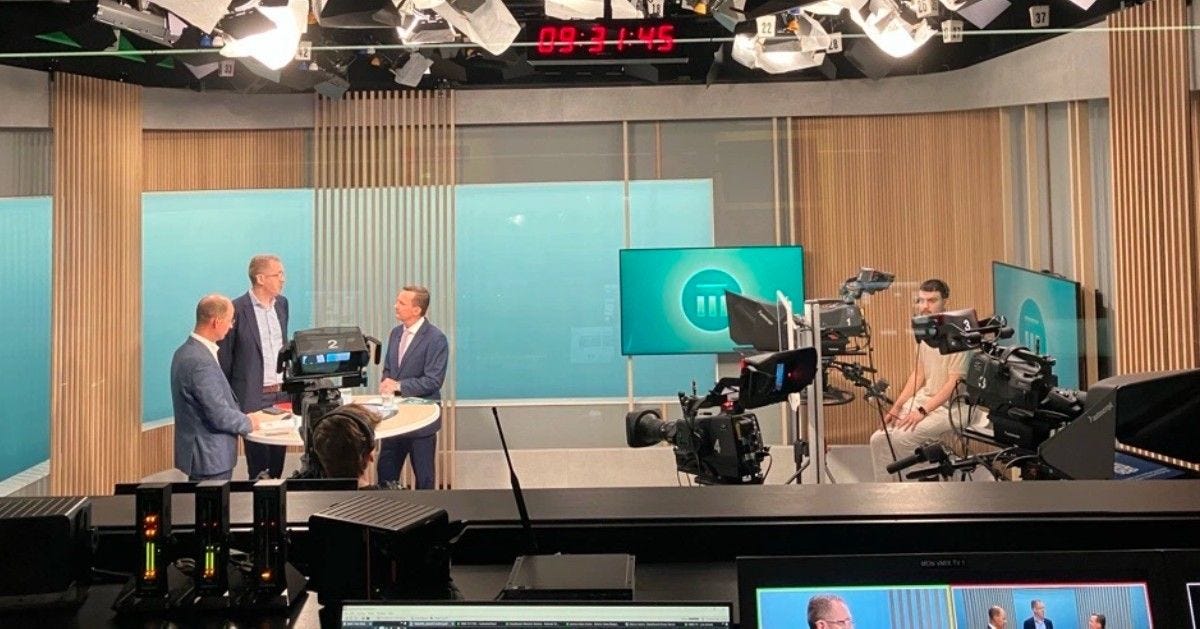
Discussing the state of things in Zurich. SwissRe invited me to talk about everything from Iran to Taiwan. More here.
ps — I do talks, moderating, and so on. Drop me a line.
Thanks for reading. If this was forwarded to you, and you’d like to get it in future, feel free to click the blue button. You can also add me on LinkedIn.