

Below a few thoughts on flunking new year’s resolutions, along with some of the best things I managed to read last year.
Happy New Year where-ever you are, and enjoy the first weekend of the 2021!
Best wishes,
James

Was this forwarded to you? Thanks to whoever did that. Feel free to sign up here. Or indeed unsubscribe below, if this is all a bit much.
Failing to be a “super reader”
“Do the reading”. This was Ezra Klein’s big reflection from his time running Vox, as he prepares to leave for the New York Times. The point being that if you want to find new ideas, there is no substitute for setting aside time for “deep reading”, and what he calls the “fugue state” that comes with it. Pretending, grazing, or tricks like speed reading don’t cut it.
Yet finding time to read is undeniably hard. There are jobs and children and addictive phones in our lives. This year was especially tough, for obvious reasons. Finding time makes a difference though, as the chart below shows. The median US reader, getting through 12 books annually, will at my age perhaps manage only another 500 or so. Make more time and you can read 4 times as many.
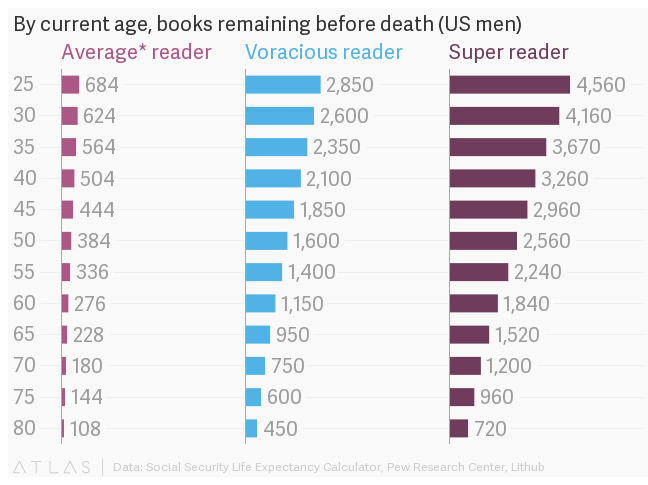
Last year my new year resolution was to read 50 books. I failed. By a few days back I’d managed 41, with a few more half finished. (You can see the final list here, if you like.) I’m fairly happy with that. It was well short of my goal, but an improvement on the 37 I managed in 2019. And why 50? It was the arbitrary definition of a “voracious” reader in the study above.
A few reading hacks did work. Reading on public transport helped. Reading in the early morning did too. Locking away my phone in the evening avoided distractions. I cut down on long form articles and TV. I often carried around a physical book , just in case I got a little time I didn’t expect.
What mattered most was a reading routine. Throughout the year I read most when I set aside a chunk of time each day, usually between 9pm and 10pm, when I would read at the table, rather than in bed as I was about to go to sleep.
The target worked too. Having that 50 figure in the back of my head helped. Early in the year I could sense when I was falling behind, and I’d consciously try to find more time. And even when 50 was clearly out of reach, I still wanted to try and read more than the year before. So I’m going to try again for 50 books in 2021. Let’s see if I can make it 2nd time lucky.
My picks for the best book of 2020 are below, while my list of 41 is here, along with tentative plans for reading in the coming year. I’d appreciate any enthusiastic fiction recommendations too, if any of you would mind replying with the best novel you read last year?
Top 3 fiction books of 2020
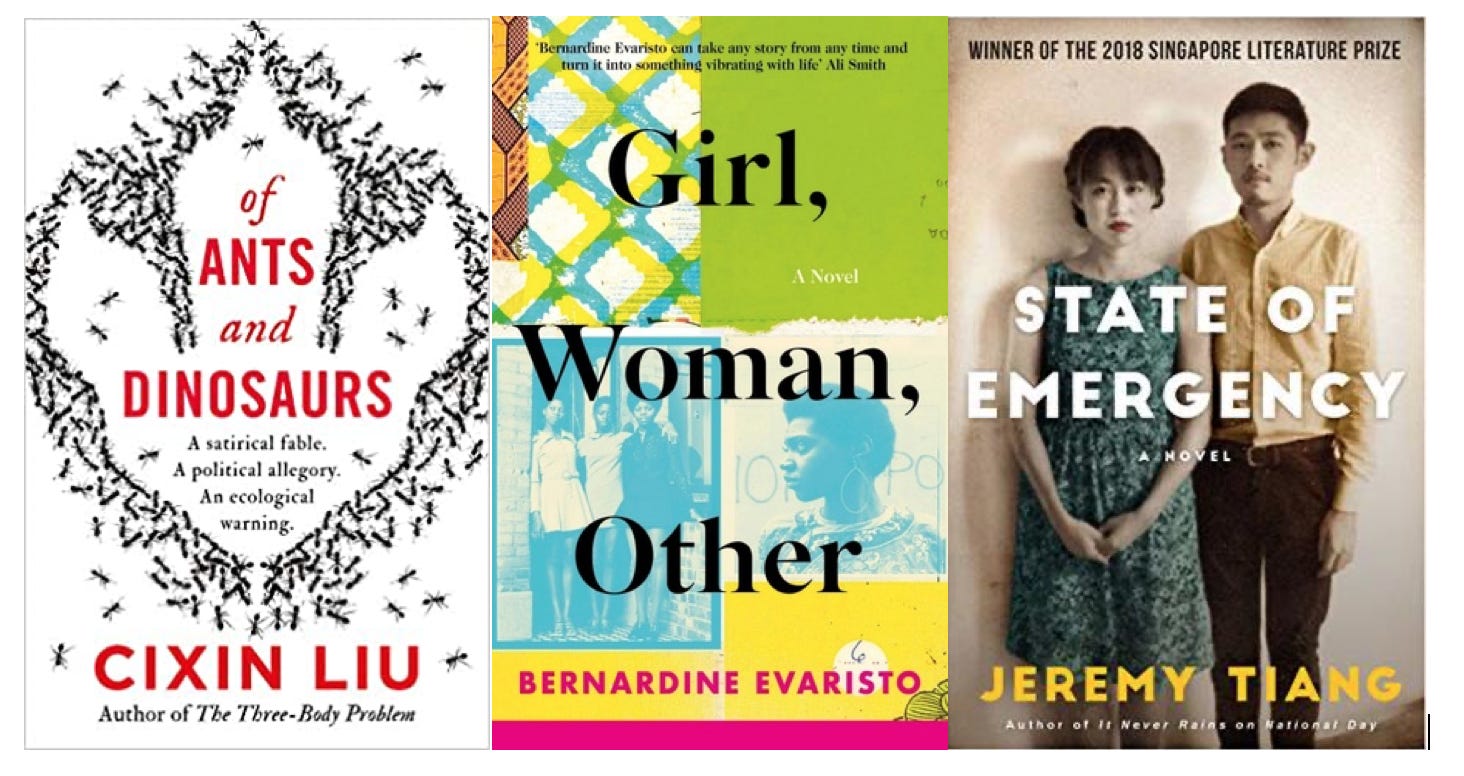
Of Ants and Dinosaurs by Liu Cixin, China’s sci-fi giant. I read his 3 Body Problem too, but preferred this fun and charming parable of an ancient earth in which ants and dinosaurs gain higher intelligence. It’s short, interesting, and hugely enjoyable. My book of the year.
Girl Woman Other, by Bernardine Evaristo. Last year’s Booker winner, recommended by my Mum. A dozen interconnected stories of black British women, touching on questions of race, gender and femininity, with an especially illuminating subplot on trans issues. Also at times very funny.
State of Emergency by Jeremy Tiang. I’m trying to read more SE Asian books, and this is by the the best I've found: a meditative, beautifully-written story about an extended family, weaving together modern Singapore with leftist movements and political detentions during the Malayan Emergency in the 1950s.
Top 3 non-fiction books of 2020
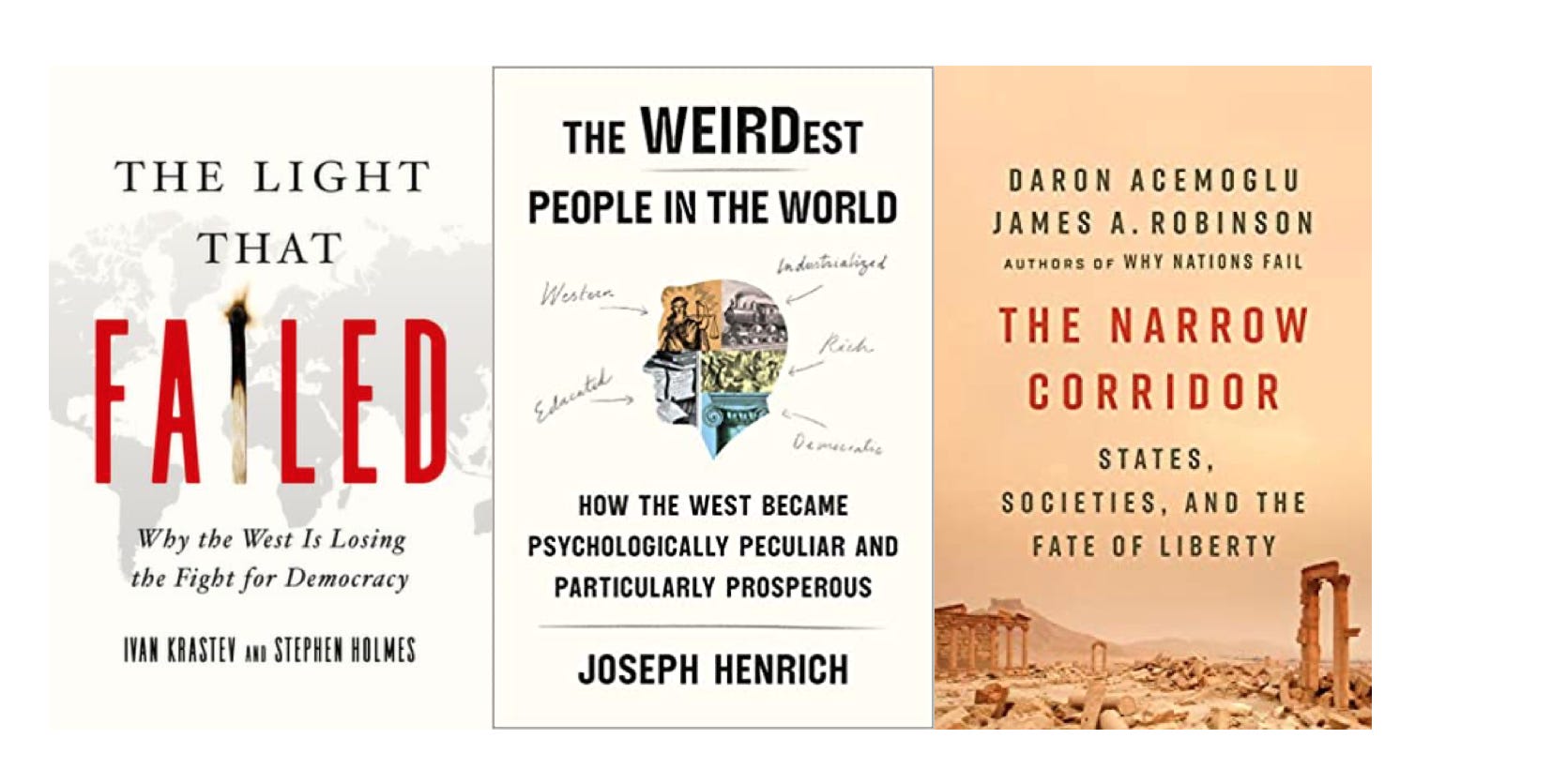
The Light That Failed by Ivan Krastev and Stephen Holmes. The best account I’ve read on the post-1989 failures of liberal democracy. The opening portion on Eastern Europe is particularly dazzling.
The WEIRDEST People In The World by Joseph Henrich. A late entry which I review in the FT this weekend — see below — but a fascinating one, telling the sprawling story of human cultural evolution, and in particular how 5th century laws banning cousin marriage helped to invent the modern world.
The Narrow Corridor by Acemoglu and Robinson. An even-better follow-up to Why Nations Fail. Fascinating both for its big-picture argument about why some countries succeed, and its many small digressions into the political organisation of everything from medieval Germanic societies to contemporary African tribes.
5 Essays Worth Reading
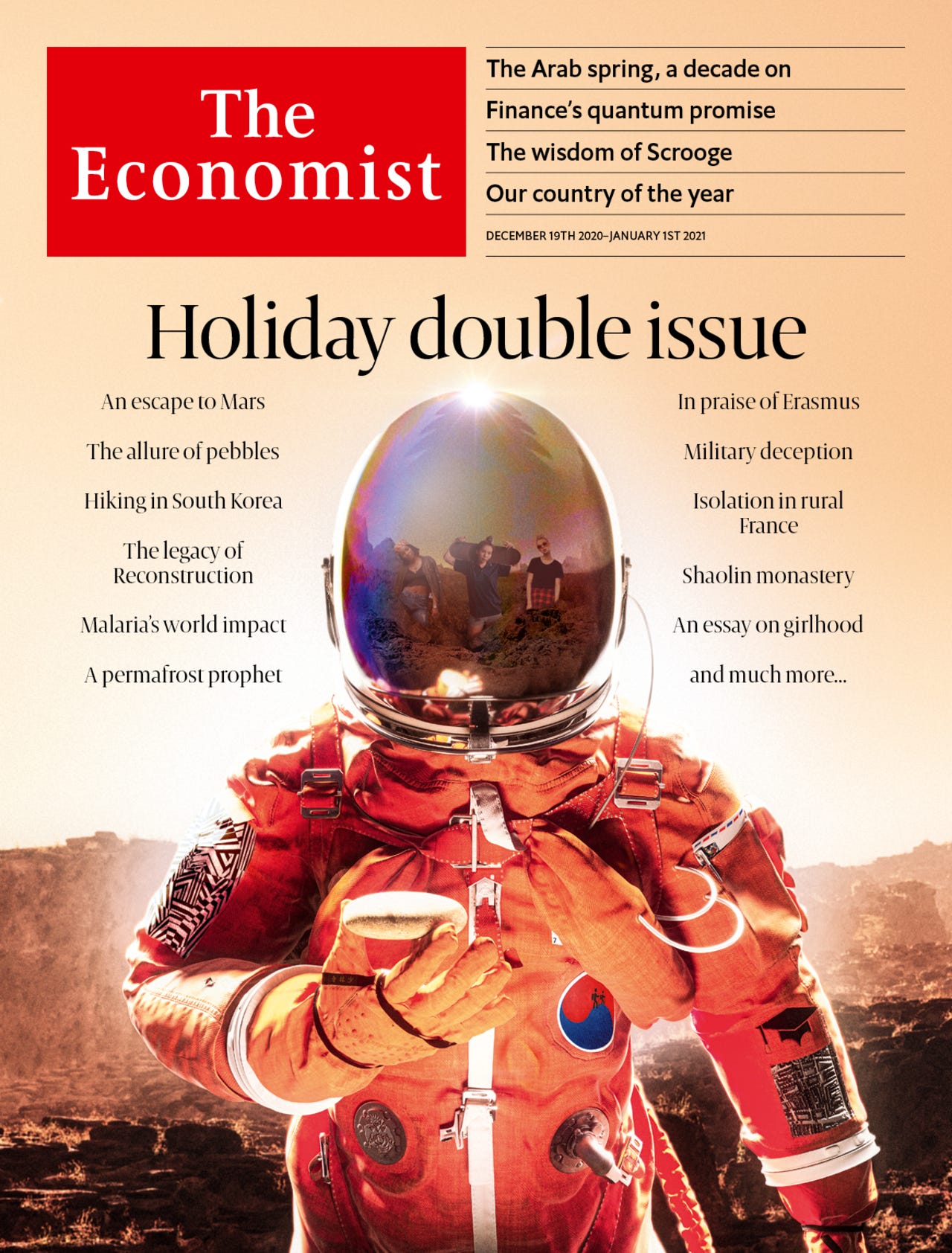
Awesome, weird and everything else in the Economist, on modern teenage “girlhood”. I always look forward to their Xmas edition, which is always packed with fine essays. This on the lives of young girls was especially fascinating, both for its reporting and its cautious sense of optimism.
One of the ways you can see that boyhood has now become increasingly irrelevant to girlhood is that girlhood is changing in ways that boyhood is not. Girls are allowed, and allow themselves, a range of interests, behaviours and attitudes that is broad, varied and flexible. Boyhood remains more narrowly defined both by society at large and by boys themselves.
Murder in Malta by Ben Taub in the New Yorker. Gripping account of the conspiracy to assassinate Daphne Galizia that went right up to Malta’s Prime Minister — and how her children then fought back.
One day, early in the spring of 2017, Fenech summoned Theuma to a restaurant in Portomaso, and asked if he knew how to get in touch with George the Chinese—the street name for George Degiorgio, who was known in Marsa as a hit man.
“I know him, but I’m not in touch with him,” Theuma replied.
“Get his contact,” Fenech said. “Get him to kill Daphne Caruana Galizia.”The Journalist and the Pharma Bro by Stephanie Clifford in Elle. One to read with your hands over your face: the almost unbelievable story of the female Bloomberg journalist who first reported on, and then fell in love with, Martin Shkreli, the much reviled hedge fund magnate, price gouger and now convicted felon.
"If it Hadn't Been for the Prompt Work of the Medics" on Bellingcat. Alexey Navalny calls one of the Russian agents who tried to kill him, by posing as a fellow spy. Over a long conversation, the agent explains how it all happened, right down to the fact that they poisoned his underwear with Novichok.
How Civilization Broke Our Brains by Derek Thompson in the Atlantic. A good piece to read as you head back to work on Monday — on why our brains struggle with unstructured free-time, and what we might learn from less stressed tribal societies:
This bizarre need to feel busy, or to feel that time is structured, even when one is sprawled on the couch on a weekend afternoon—where does it come from? Is it inscribed in our DNA, or is it as much an invention of industrialized culture as paper clips and microchips? To answer that question, we would have to understand the texture of human life for most of our history, before civilization and workweeks edged their way into the picture.
What I’ve been up to
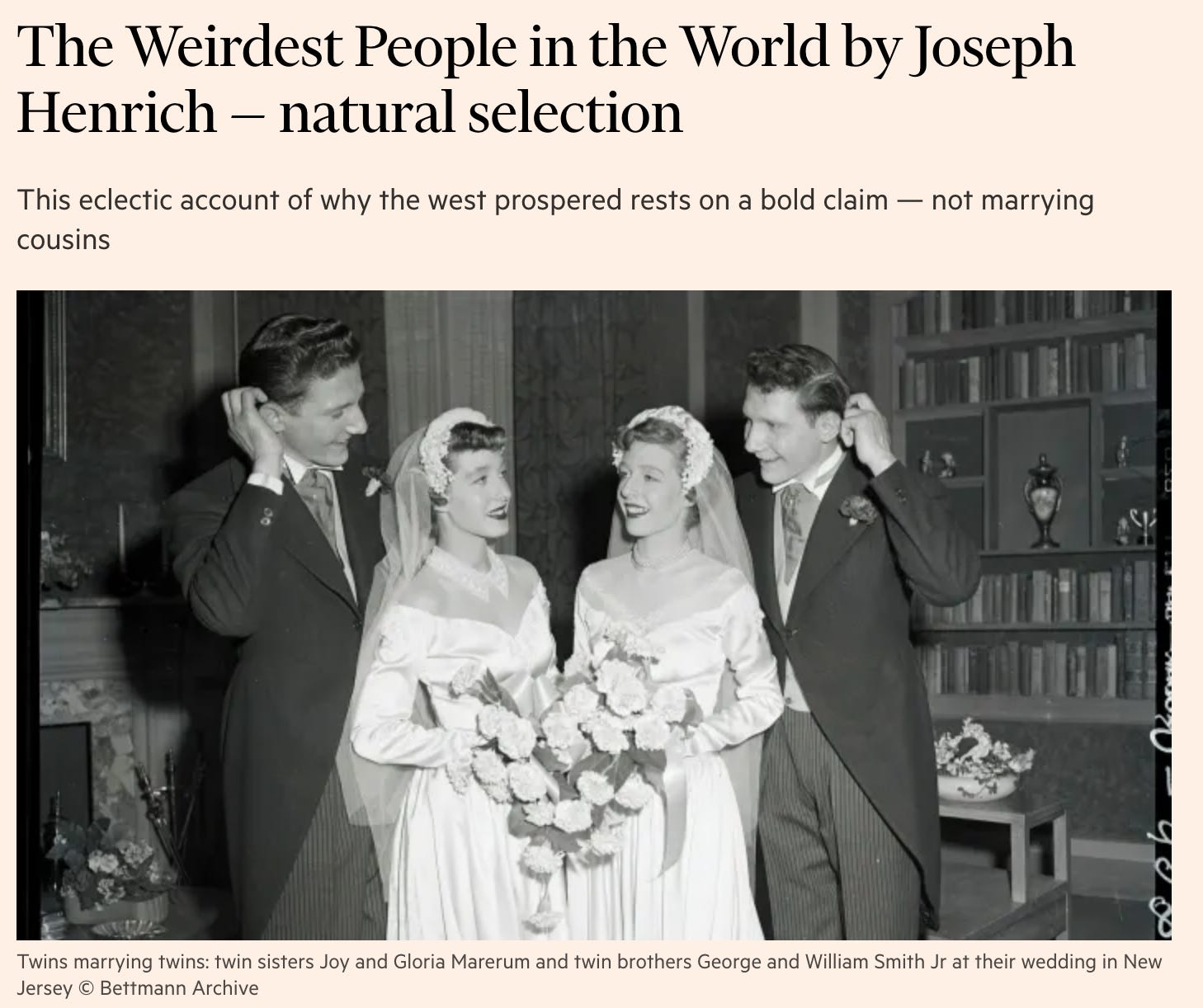
It’s ok to be WEIRD. I met Joseph Henrich last year at a conference in Malaysia. His previous book on human “collective intelligence” was great, so I was keen to review the follow-up, which runs in the FT this weekend today. A taste:
WEIRD peoples evolved to become more co-operative, helping them to live as individuals in free towns and trade with strangers in markets. They also grew less violent, partly because men show lower testosterone levels when they form the kind of exclusive monogamous relationships Pope Gregory had in mind. “From the ruins of traditional social structures, people began to form new voluntary associations based on shared interests or beliefs rather than on kinship or tribal affiliations,” Henrich writes. And so the modern world was born.
Dual Circulation, circulated. My recent Noema essay on China’s big new idea got lots of pick-up, including here by Ishaan Tharoor in the Washington Post, in this essay by the head of the Atlantic Council, and by, er, Senator John Cornyn.
Crunch time for the Bollygarchs. I was quoted in two long-ish Bloomberg features: one on the delivery challenges faced by Mukesh Ambani, the other on the rise and rise of his rival Gautam Adani.

Chatting with The Browser. I’m a big fan of The Browser, a thoughtful site that curates interesting things to read. They have kindly invited me to be a guest on their latest “Browser Conversations” Zoom call, where I’ll be chatting to editor Robert Cottrell for about the year ahead, from US / China to trends in Chess and anything we can think of in between. This will be next Sunday 10th at 9pm Singapore / 1pm UK. If you’d like to join just e-mail uri@thebrowser.com and he will send you the link

5 things to ponder
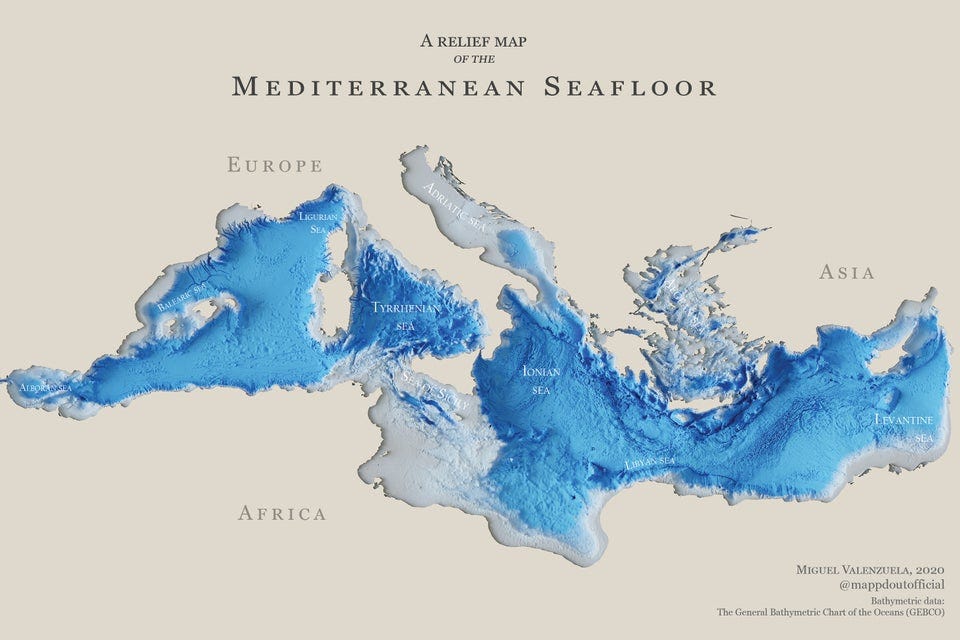
The Mediterranean nearly dried out 6m years ago. Its refilling from the Atlantic “may have been the biggest flood in our planet’s history”, as National Geographic puts it.
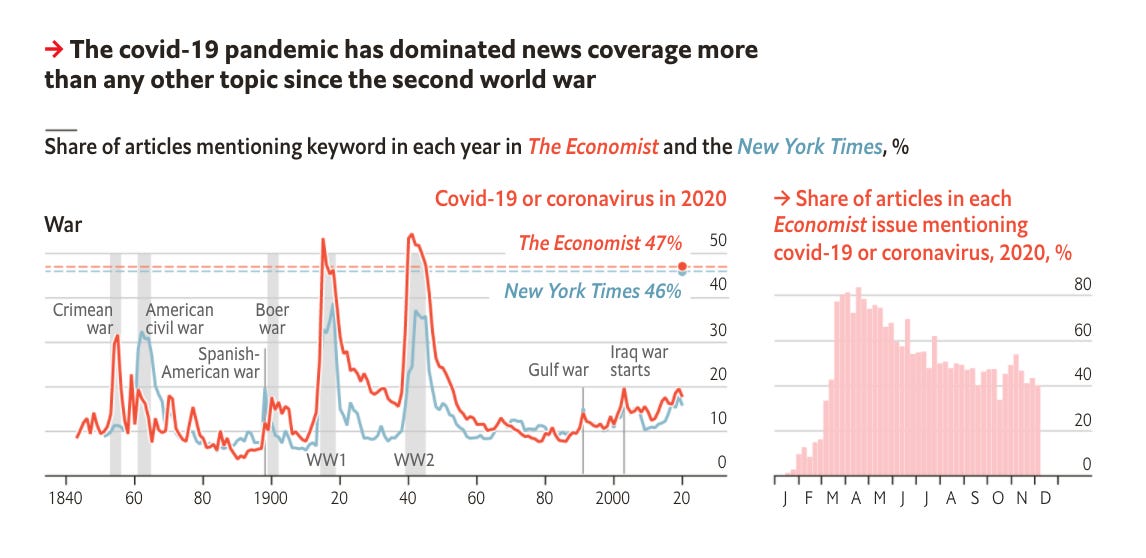
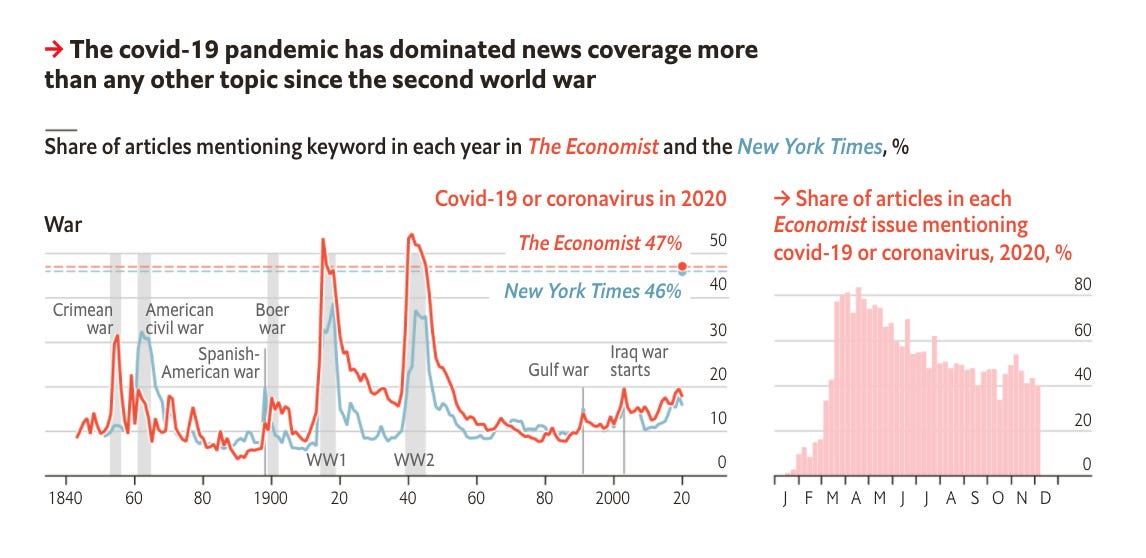
COVID has been one of the biggest stories ever. The Economist data team tallied up pandemic mentions for themselves and the New York Times. Only the two world wars came close.
Brexit finally happened. This long-ish thread by Anton Spisak was one of the most useful things I have read on deal’s strengths and weaknesses.
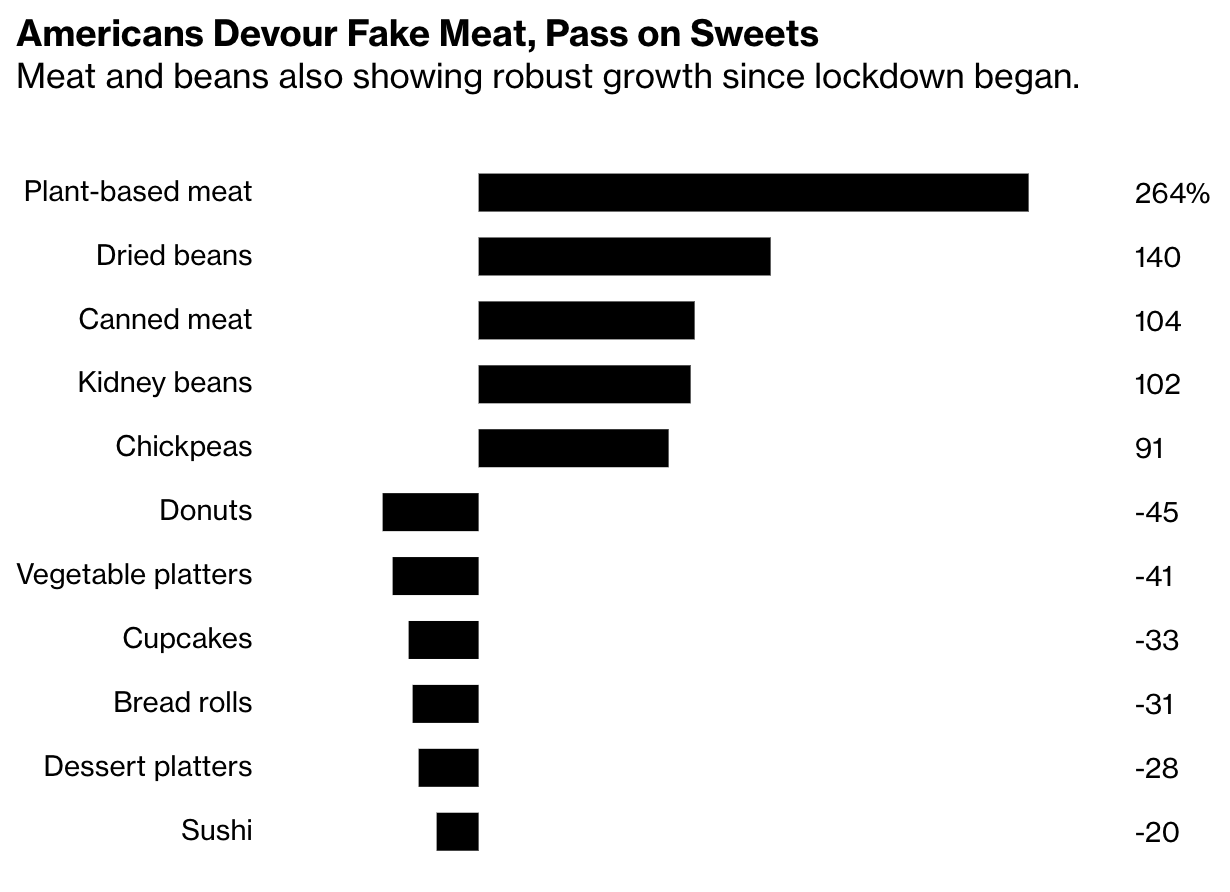
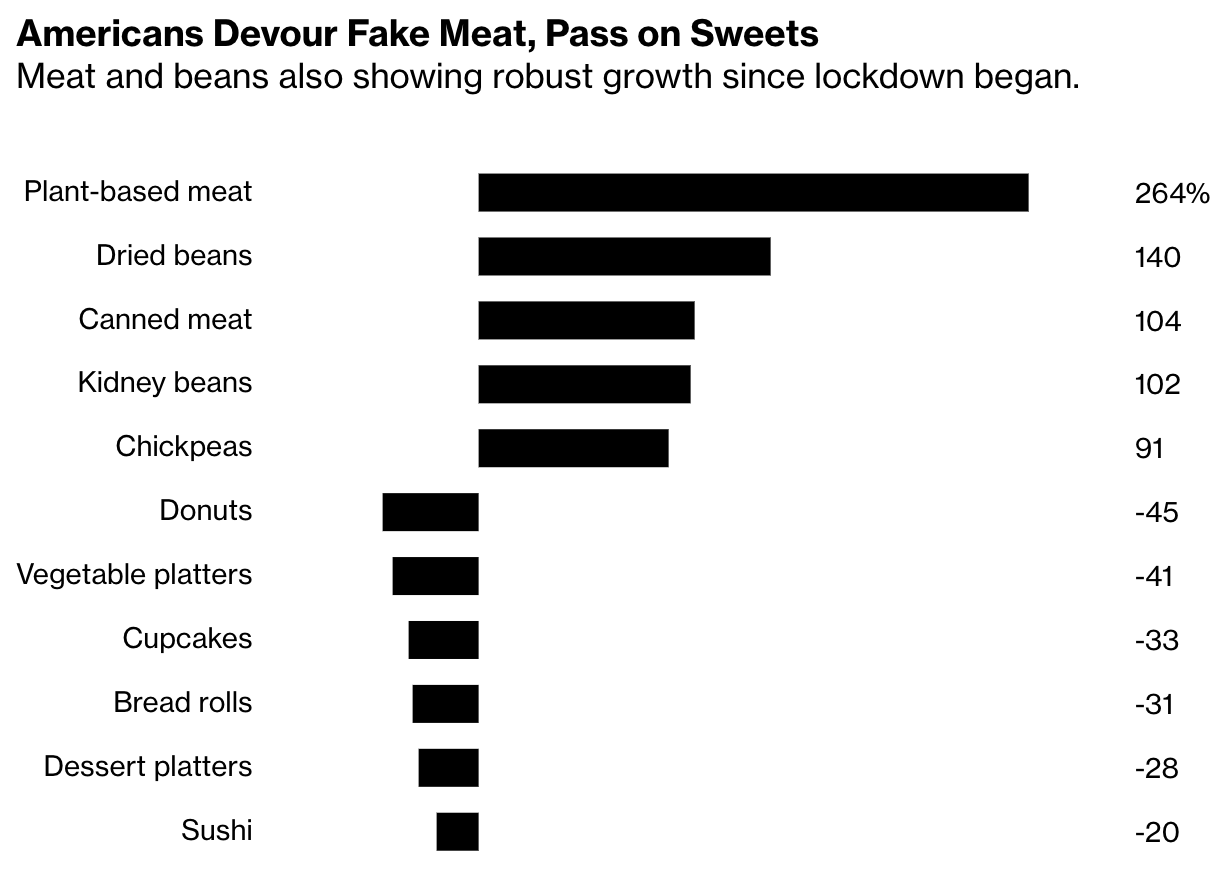
US plant-based meat sales rose 264% during the height of the pandemic, pushed up by shortages in actual meat. This recent podcast with the CEO of Beyond Meat was fascinating too, both on the sector, and his rivalry with Impossible.
10 Americans are rescued at sea ever day. 3 more die. This nugget from another fascinating podcast: Ezra Klein talking to author Michael Lewis, about his working style and how he finds his characters, including unheralded government workers in areas like search and rescue.
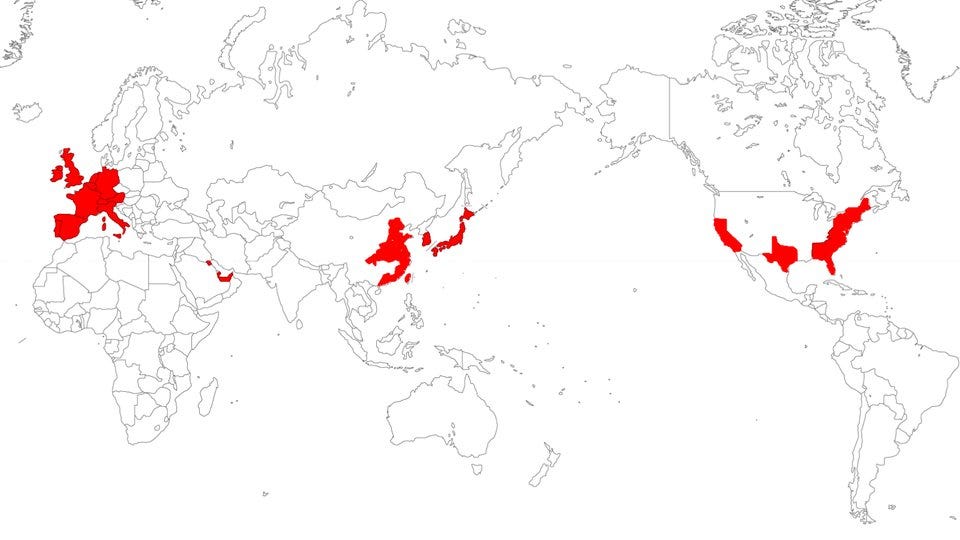
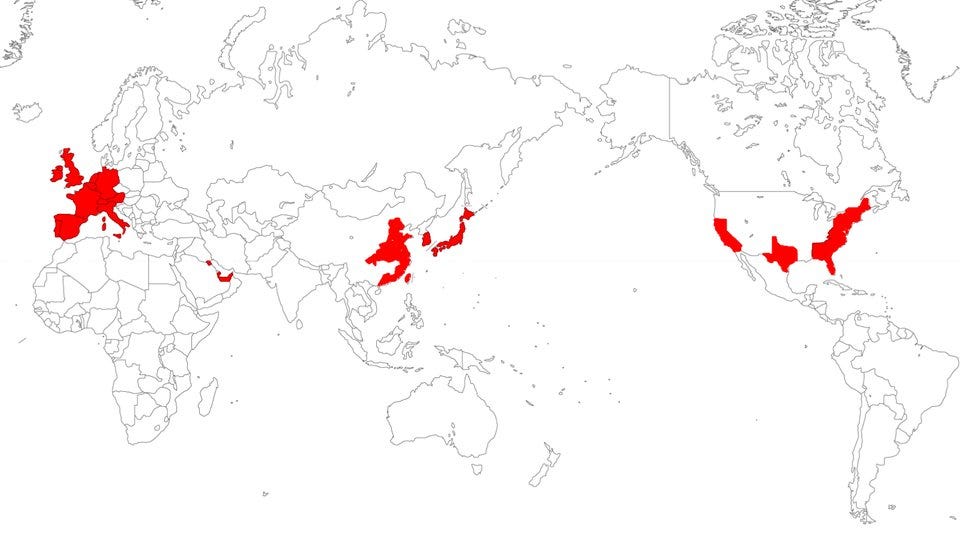
The power of urban “mega clusters”. The areas shaded in red account for half of global GDP. (via Reddit)
Thanks for reading! If you want to keep in touch add me on LinkedIn. Please also feel free to pass this mail on to others you think might like it. James.